
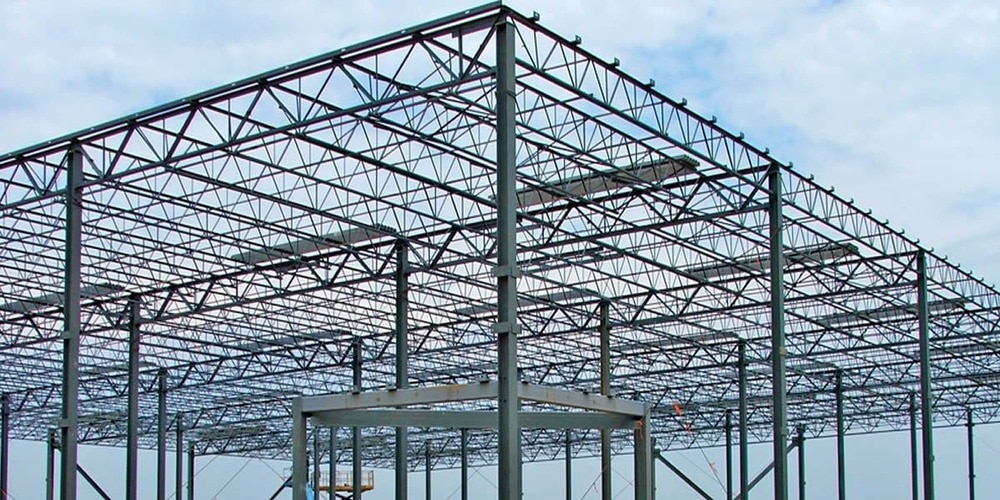
Structural Steel Fabrication
Description
the process of cutting, shaping, and assembling raw steel materials into custom frames and structural components for buildings and infrastructure.
The Fabrication Process
• Design & Engineering: Blueprints and 3D digital models are created using specialized CAD software to calculate load requirements and dimensions.
• Cutting: Raw steel plates and beams are sliced into specific sizes using automated tools like plasma torches, lasers, or water jets.
• Drilling & Punching: Computer-controlled CNC machines drill precise holes for bolts and fasteners to ensure accurate on-site alignment.
• Bending & Shaping: Hydraulic press brakes and rollers shape the steel pieces into required angles or curved profiles.
• Assembly & Welding: Skilled workers fit the components together and join them permanently using welding or heavy bolting.
• Finishing & Coating: The finished steel is cleaned and treated with protective coatings like paint or galvanization to prevent rust and corrosion.
Key Benefits
• High Strength: Offers an exceptional strength-to-weight ratio to support massive loads safely.
• Speed: Prefabricated components arrive ready for rapid assembly on site, accelerating project timelines.
• Sustainability: Steel is completely recyclable and produces minimal manufacturing waste.