
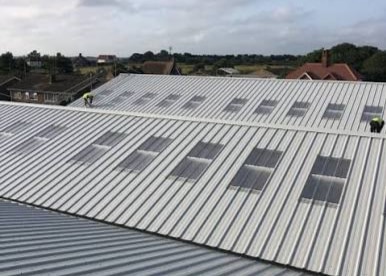
Roofing And Cladding
Description
Roofing and cladding form the protective outer shell of a building, shielding the interior from weather while defining its exterior appearance.
What is Roofing?
• Definition: The top covering of a building designed to protect against rain, sun, wind, and snow.
• Components: Includes support structures, insulation, waterproof underlayment, and exterior finished layers like metal sheets, tiles, or shingles.
• Primary Role: Acts as the primary defense against water pooling, dampness, and structural degradation from above.
What is Cladding?
• Definition: The external skin or layer applied to the sides (walls) or over the roof structure of a building.
• Common Materials: Metal panels (like aluminum or steel), PVC, fiber-cement, composite boards, and timber.
• Primary Role: Shields exterior walls and structures from moisture, improves thermal and acoustic insulation, and upgrades aesthetics without supporting the main building weight.
Key Differences
• Location: Roofing covers the top horizontal or sloped overhead surfaces, while cladding primarily covers vertical exterior walls or acts as an outer protective skin.
• Load-Bearing vs. Barrier: Roofs are engineered as heavy-duty load-bearing and water-shedding systems, whereas cladding functions mainly as a protective, non-structural control element against wind, noise, and runoff.